
- Home
- Office FitOut
- Office Furniture
- All Office Furniture Ranges
- Acoustic Meeting Pods & Furniture
- Soft Seating
- All Soft Seating Ranges
- Arco Modular Soft Seating
- Chill Modular Soft Seating
- Discontinued Product
- Discontinued Product
- Danae Lounge Chair
- Round Pouffe
- Soft Rock Modular Soft Seating
- Twist & Sit Lounge Chairs
- Tula Meeting and Lounge Chair
- Twist n’ Relax Armchair
- Twist n’ Sit Soft Seating
- Vegas Office Lounge Chair
- Silent Room Acoustic Pod
- Desks & Bench Desking
- Sit-Stand Height Adjust Desks
- Task Chairs
- Meeting & Conference Chairs
- All Meeting & Conference Chair Ranges
- AURA Meeting and Conference Chairs
- Wind Meeting Chair
- ComfortTones Meeting Chair
- Diva Meeting Chair
- EVA Meeting Chair
- Gama Visitor Chair
- LightTones Conference Chair & Dining Chair
- Tula Meeting and Lounge Chair
- Twist n’ Relax Armchair
- Moon Conference Chair
- Moon Wood Stacking Conference Chair
- NorthCape Meeting & Visitor Chairs
- OverTones Plastic Chair
- Twist n’ Sit Meeting & Conference Chair
- Wait Stacking Chair
- Stacking Conference Chairs
- Executive Chairs
- Executive Furniture
- Boardroom & Meeting Tables
- Reception Counters
- Storage Cupboards
- Partition Walls
- Office Carpet Tiles
- Carpet Tile Supply & Fitting Service
- GALLERY – Carpet Tile Designs
- Burmatex Carpet Tile Range
- ALASKA carpet tile range
- ARCTIC carpet tile range
- BALANCE RATIO carpet tiles
- BALANCE GRID carpet tiles
- BALANCE SCALE carpet tiles
- DAPPLE carpet tile range
- GO TO carpet tile range
- INFINITY carpet tile range
- ORIGIN carpet tile range
- OSAKA carpet tile range
- ROCKLINES carpet tile range
- SNOWFALL carpet tile range
- STANDING STONES carpet tile range
- SURFACE TRACE carpet tile range
- THREADS carpet tile range
- TIVOLI carpet tile range
- TIVOLI PLANKS carpet plank range
- TIVOLI MIST carpet tile range
- TIVOLI MIST PLANKS carpet plank range
- Shaw Contract Carpet Tiles
- Interface Carpet Tile Range
- House Alterations
- Our Work
- More
- Contact - 020 8878 1633
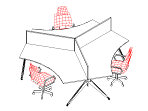 120° desks
 120° desks
 120° desks
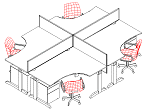 Crescent (corner) desks orientation 1
 Crescent (corner) desks orientation 2
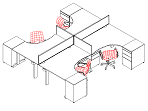 Crescent desks with 600mm desk-high pedestals
 Crescent desks with 800mm desk-high pedestals
 Crescent desks with 800mm & 600mm desk-high pedestals
 Crescent desks with 800mm desk-high pedestals and tambour storage
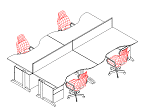 Double wave desks
 Single wave desks orientation 1
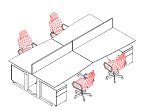 Single wave desks orientation 2
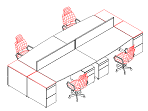 Single wave desks with 800mm desk-high pedestals
 Single wave desks with desk-end tambour storage
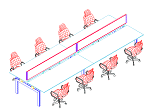 Bench system with shared components & inset intermediate legs to provide greater seating flexibility
 Double sided Bench system with shared components & inset intermediate legs to provide greater seating flexibility
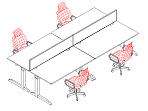 Regular 1600mm rectangular desks orientation 1
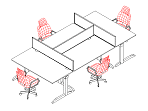 Regular 1600mm rectangular desks orientation 2
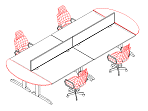 Rectangular desks with D shape meeting ends
 Single sided bench desk using shared components & reduced legs to provide greater freedom of movement.